Each service below is available to individual visitors, couples, families and groups. Pricing varies by group size and programme length — see our pricing page for full details.
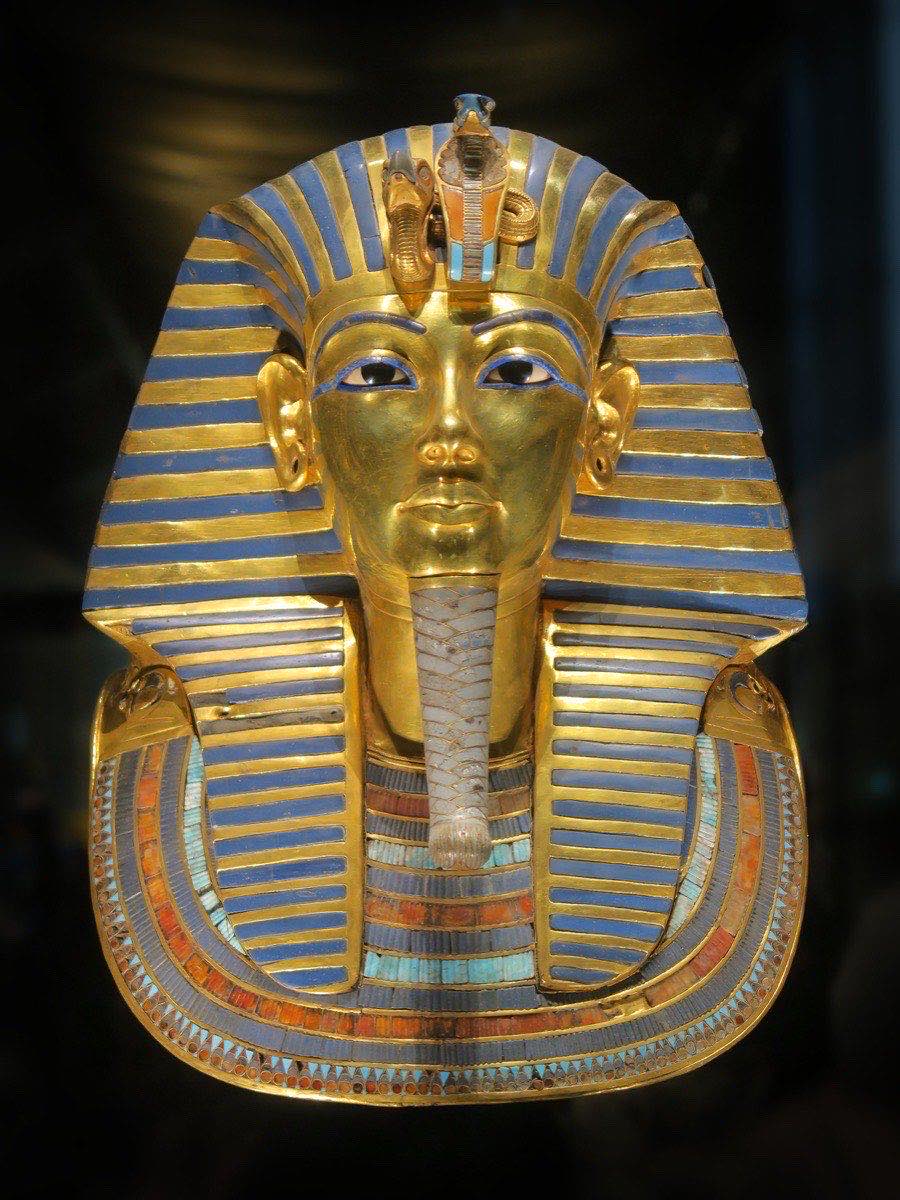
The Grand Egyptian Museum at Giza opened its main galleries in 2023 and houses over 100,000 artefacts, including the complete Tutankhamun treasure relocated from the Cairo Museum. Without a guide, most visitors spend their time walking past objects without understanding what distinguishes a late 18th Dynasty canopic jar from an early 19th Dynasty one, or why the layout of the Tutankhamun halls tells a story about how burial changed between reigns.
Our four-hour walk-through is structured thematically rather than chronologically. We begin with the conceptual framework of ma'at — divine order and balance — that underpins almost every object in the collection, then move through the dynastic galleries with that lens in place. The Tutankhamun halls receive a full hour of dedicated attention. Maximum group size: 10.
Duration: 4 hours | Location: Giza, Cairo | Group size: 4–10 | Languages: EN, AR, FR, DE, IT, ES
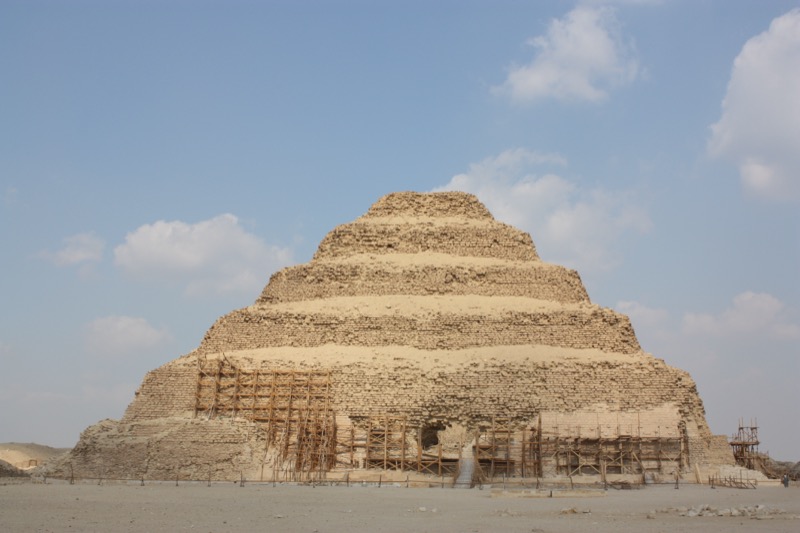
Saqqara is one of the most layered and underestimated sites in Egypt. Visitors who come expecting a single step pyramid discover a vast necropolis spanning 3,000 years of burial practice — from the 1st Dynasty mastabas through the New Kingdom animal catacombs to the Coptic monastery that sits at the site's edge. The recently reopened pyramid of Teti contains some of the oldest funerary texts in existence: the Pyramid Texts, written on its interior walls around 2350 BCE.
Our full-day programme combines Saqqara with the adjacent ancient capital of Memphis, where the colossal statue of Ramesses II and the alabaster sphinx remain on open display. The journey between the two sites takes fifteen minutes and we use the time to explain how the administrative and religious functions of a pharaonic capital were deliberately separated. Lunch is taken at a family restaurant in the village of Mit Rahina, where local specialities are served under a palm grove.
Duration: 8 hours | Location: Saqqara & Mit Rahina | Group size: 4–12 | Lunch: Included
Karnak Temple Complex is the largest surviving religious structure ever built. Covering 100 hectares and accumulated over 1,500 years from the Middle Kingdom through the Ptolemaic period, it contains pylons built by different pharaohs to outsize one another, a sacred lake that served ritual and practical purposes simultaneously, and the Avenue of Sphinxes that once connected it to Luxor Temple 3 kilometres to the south.
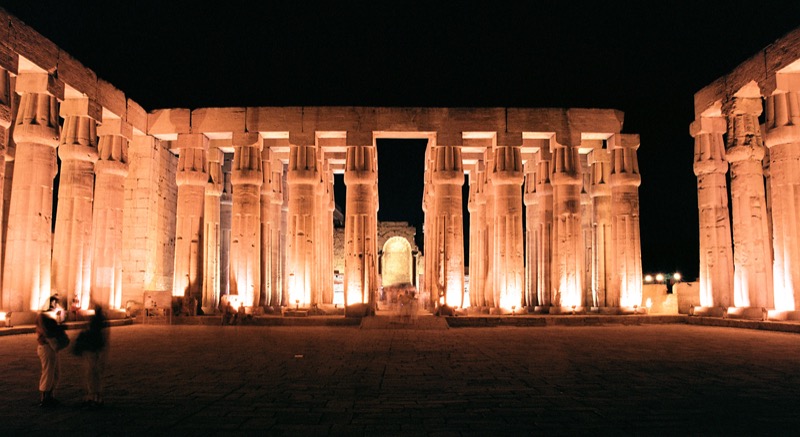
Our East Bank programme begins at Karnak at 7:00 when it opens, spending two and a half hours in the Precinct of Amun-Re before moving south to Luxor Temple for a focused 90-minute session on the colonnade hall and the buried Roman camp that was discovered beneath its southern section during 19th-century excavations. The relationship between the two temples — processional, liturgical, astronomical — is the thread running through the morning.
Duration: 5.5 hours | Location: Luxor, Upper Egypt | Group size: 4–12 | Start time: 07:00
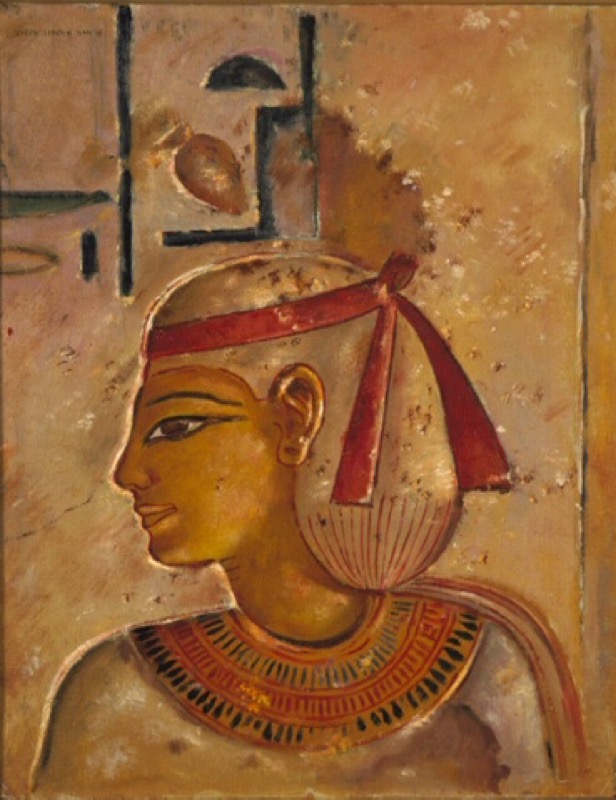
The standard Valley of the Kings visitor ticket permits entry to three tombs from a rotating pool. Our extended programme begins before the site opens with a background briefing at our West Bank base in Al-Gezira, covering the theology of the Amduat and the Book of the Dead that line these tombs' walls. Understanding the purpose of the texts before you descend transforms what you see from decoration into narrative.
We hold specialist entry arrangements for KV14 (Tausret and Setnakhte), KV57 (Horemheb) and KV11 (Ramesses III), plus access to the Tomb of Nefertari in the Valley of the Queens, which requires a separate ticket and is frequently sold out weeks in advance. Our programme includes a visit to the Deir el-Medina village — home of the artisans who built the royal tombs — and the Temple of Hatshepsut at Deir el-Bahari.
Duration: 7 hours | Location: West Bank, Luxor | Group size: 4–8 | Advance booking: 3 weeks minimum
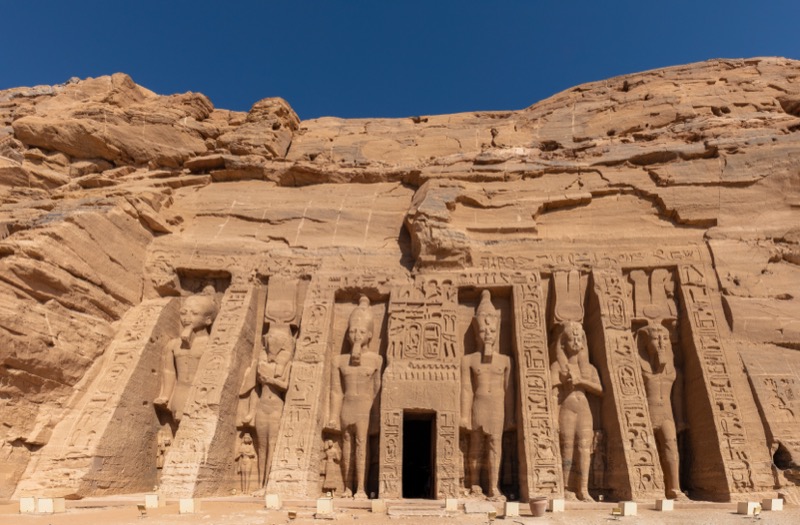
Most visitors travel to Abu Simbel in convoy by road from Aswan, arriving mid-morning when the site is already busy. We operate our Abu Simbel programme differently: we depart at 04:30 to arrive at dawn, before the main convoy, and spend the first hour of the day at the Great Temple of Ramesses II in near-solitude. The façade's four colossal seated statues, each 20 metres tall, and the interior sanctuary — aligned so that sunlight illuminates the four gods within on two precise days each year — receive the time and quiet they deserve.
The programme continues with the adjacent Temple of Nefertari, then an extended discussion of the 1960s UNESCO relocation project — the largest and most complex monument-moving operation in history — which raised both temples 65 metres above their original position to save them from Lake Nasser. The engineering of the rescue is, by almost any standard, as impressive as the original construction. We return to Aswan by 13:00.
Duration: 9 hours incl. travel | Location: Abu Simbel, Aswan Governorate | Group size: 4–10 | Departure: 04:30 from Aswan
Alexandria holds a strange position in Egypt's heritage landscape: founded by a Macedonian conqueror and governed for three centuries by Greek-speaking rulers, yet fundamentally Egyptian in much of its religious and artistic expression. Navigating that hybridity is what makes a guided visit to Alexandria so much richer than arriving alone. The Catacombs of Kom el Shoqafa — three levels of burial chambers cut from rock in the 2nd century CE — are the clearest visual statement of the Greco-Roman-Egyptian fusion, with painted walls that blend pharaonic iconography with Hellenistic architectural forms.
Our programme also visits the Qaitbay Citadel, built on the site of the ancient Pharos lighthouse, and the Greco-Roman Museum (subject to its reopening schedule), with a guided walk through the Serapeum hill where Alexander's planned religious centre once stood. The Bibliotheca Alexandrina visit includes both the main reading hall and the Manuscript Museum, which houses digitised fragments from the ancient library's collection tradition. Lunch is at a seafront restaurant in the Anfushi district.
Duration: 8 hours | Location: Alexandria | Group size: 4–12 | Travel: Train from Cairo recommended
For visitors with four to seven days in Egypt, our Nile Corridor itinerary covers the full heritage axis from Cairo south to Aswan, with overnight stops in Luxor and optional extensions to Aswan. Day one covers the Giza necropolis and the Grand Egyptian Museum. Day two is dedicated to Saqqara and Memphis. Days three and four cover both banks of Luxor, including Karnak, the Valley of the Kings, Deir el-Bahari and Deir el-Medina. Day five focuses on Edfu and Kom Ombo temples from a cruise or train base in Aswan, with day six reserved for Abu Simbel.
The multi-day format allows a level of connection between sites that single-day visits cannot provide. By day four, visitors understand the evolution from Old Kingdom pyramids to New Kingdom rock-cut tombs as a single continuous development, not separate isolated phenomena. Our guide travels with the group throughout, providing continuity of interpretation across six days of immensely varied material. We handle all permit and priority-access arrangements in advance.
Duration: 4–7 days | Location: Cairo – Luxor – Aswan | Group size: 4–10 | Advance booking: 6–8 weeks
University departments, independent research groups, professional associations and school sixth-forms with interests in Egyptology, classical history, art history, architecture, religious studies or archaeology can commission purpose-built group programmes from us. These are constructed around the group's specific curriculum or research focus, not a generic itinerary. We design the sequence of sites, the thematic questions addressed at each location, and the level of technical detail to match what the group actually needs.
Academic programmes include curriculum-aligned briefing materials for participants, a pre-trip briefing call with the lead guide, access to site areas not available to general visitors where permissions can be secured, and a post-trip debrief session available by video call. We have delivered programmes for groups from the UK, Netherlands, Germany, the United States and Japan. Contact us with your group's focus, dates and numbers for a bespoke proposal.
Duration: By arrangement | Location: All sites | Group size: 8–40 | Advance notice: 8–12 weeks
Our booking process is straightforward. Most enquiries are answered within two working days, and we take care of all permit applications, priority-access bookings and logistical arrangements so you do not have to.
Use the contact form to tell us your travel dates, the sites or museums you are most interested in, your group size, and any particular focus — whether that is a specific dynasty, a medium such as sculpture or papyrus, or a thematic question you have been carrying since you first read about ancient Egypt. The more context you give, the more precisely we can match a guide and programme to what you actually want. There is no obligation attached to an enquiry.
Within two working days we send a programme outline covering the sites to be visited, the sequence and timing, the guide assigned to your group, what is included (transport within sites, specialist entry tickets, pre-visit materials) and the price broken down by component. If the initial proposal does not match your preferences exactly, we revise it until it does. There is no standard package that every group is pushed through — each programme is built for the specific group receiving it.
On confirmation we issue the full programme schedule, a pre-visit reading list tailored to your itinerary (we keep it short — three to five resources, not a bibliography), and practical logistics for each site including current ticket prices, photography rules, clothing requirements and access notes. For multi-day itineraries we hold a 30-minute briefing call with the guide who will be leading your visit so you can ask questions before you arrive in Egypt. All communication from this point happens through a single contact at Nile Heritage Guides.
On the day, your guide meets you at the agreed point — hotel lobby, site entrance or transport hub — and manages all the practical details so you can focus entirely on the experience. Group size is capped at the number specified per programme. Guides carry laminated site plans and specialist illustrated reference sheets at each location. If something unexpected happens — a section of a site closes, a ticket system changes, access is restricted — we adapt on the spot and ensure the programme delivers its full educational and experiential value.
Regardless of which programme you book, every Nile Heritage Guides service includes a licensed and Ministry of Tourism–accredited guide, pre-visit orientation materials, all site-specific specialist entry arrangements (applied for and paid by us, then invoiced separately at cost), and a dedicated contact for any questions before or after your visit. We do not use subcontracted freelance guides — every programme is led by a member of our own team, all of whom hold postgraduate qualifications in Egyptology or a related field from recognised universities in Egypt, the UK or Germany.
Groups that return for a second programme within three years receive priority scheduling during peak months (October–March, when Nile corridor sites are busiest) and a discount applied to programme fees as noted on the pricing page. Academic and research groups are encouraged to contact us for institutional billing arrangements, which we have in place with several European universities.
View our full pricing on the pricing page or reach the team directly to discuss which service fits your travel dates and interests best.